
Healing Freezer Meals for Postpartum: What to Include for Recovery
There are a lot of reasons to fill your freezer before having a baby.
Not having to cook dinner while you're recovering from birth is obviously a big one.
But as someone who has spent years teaching postpartum nutrition and helping families prepare food for those early weeks, I'm thinking about more than just convenience when I decide what deserves space in your freezer.
I'm thinking about what your body is going to need after birth — and how we can make those foods ridiculously easy to eat.
Because postpartum is not the time I want you realizing that all 15 casseroles in your freezer are basically pasta and cheese.
Pregnancy and birth place significant demands on the body. You're recovering from birth and blood loss, repairing tissue, adjusting to an enormous hormonal shift and, if you're breastfeeding, supporting milk production too.
So while there is no magical list of "healing postpartum foods," there are nutrients and foods I prioritize when I'm stocking a freezer for postpartum.
Here's what I want in there — and why.
If you're looking for the full how-to of postpartum meal prep (including 70 breakfasts, snacks, proteins, lunches and dinners you can prep ahead), head over to my Ultimate Guide to Postpartum Meal Prep.

1. Protein. Lots of it.
If I could choose only one thing to prep for postpartum, it would be prepped proteins.
Protein provides the amino acids your body needs to repair tissue after birth, and your protein needs are also higher if you're breastfeeding.
But there's another reason protein is always at the top of my freezer-prep list:
It's often the hardest part of a meal to make when you're exhausted.
Toast is easy. Fruit is easy. Throwing some crackers and cheese on a plate is easy.
Defrosting, marinating, prepping, and cooking chicken or making meatballs from scratch while you're holding a newborn? Less so.
That's why I love filling a postpartum freezer with prepped proteins that are already cooked, ready to go, and are versatile so that you can use them in any number of different meals. Especially if you’re low on freezer space, this is going to take you the furthest.
A few of my favourites are:
meatballs of all kinds
shredded buffalo chicken or pulled pork
quick bolognese
When they're already prepared, you don't need to build an entire meal around them.
You can toss a few meatballs onto a lunch plate. Add shredded buffalo chicken to a wrap or bowl. Spoon bolognese over pasta for dinner. Grab a protein-rich patty alongside a snack.
And suddenly you've added a substantial source of protein, minerals, needed fats, and energy to something that took you two minutes to put together.
This is why prepared proteins are the #1 thing I recommend freezing for postpartum.
They're flexible. They're easy to portion. And they make it dramatically easier to turn whatever else you have in the fridge or pantry into an actual meal.
I share a lot more about how I use this protein-prep approach (plus tons of specific ideas for what to make) in my Ultimate Guide to Postpartum Meal Prep

2. Iron-rich foods
Iron is another nutrient I think about intentionally when preparing food for postpartum.
Iron needs increase significantly during pregnancy, and then birth involves blood loss — sometimes a substantial amount of it.
So rather than hoping iron-rich foods happen to make their way onto your plate after baby arrives, I like making some of them easy to reach for.
That might look like:
beef or lamb meatballs (plus hidden organ meat)
quick bolognese
beef or lamb stews
lentil-based soups and curries
I use small amounts of organ meats in several of the recipes in my Ultimate Postpartum Nutrition Guide.
Organ meats are incredibly nutrient dense, but I also recognize that most people don't want to sit down to a plate of liver — myself included. Incorporating small amounts into recipes like meatballs or meat sauces is a much more approachable way to use them.
And this brings me right back to why I love freezing prepared proteins so much.
When those iron-rich foods are already cooked, you can simply toss them onto a lunch plate, add them to dinner or grab something protein-rich as part of a snack.
You don't have to decide, I need to make an iron-rich meal today.
You've just made iron-rich foods easier to eat as part of your regular day.
3. Fibre + foods that help keep things moving
We need to talk about postpartum digestion.
Constipation is common after birth, and between hormonal changes, decreased movement, medications, dehydration and just generally having your routine turned upside down, your digestive system will likely need a little extra support.
This is one reason I don’t recommend a postpartum freezer filled exclusively with heavy casseroles.
I want soft, postpartum-friendly meals that support your digestion plus meals with plenty of fluids worked into what you've prepared too.
Think:
lentil and bean-based soups
curries with cooked vegetables
baked oats sliced into single serving squares
muffins made with oats, seeds or fruit
soups and stews made with broth
stewed fruit
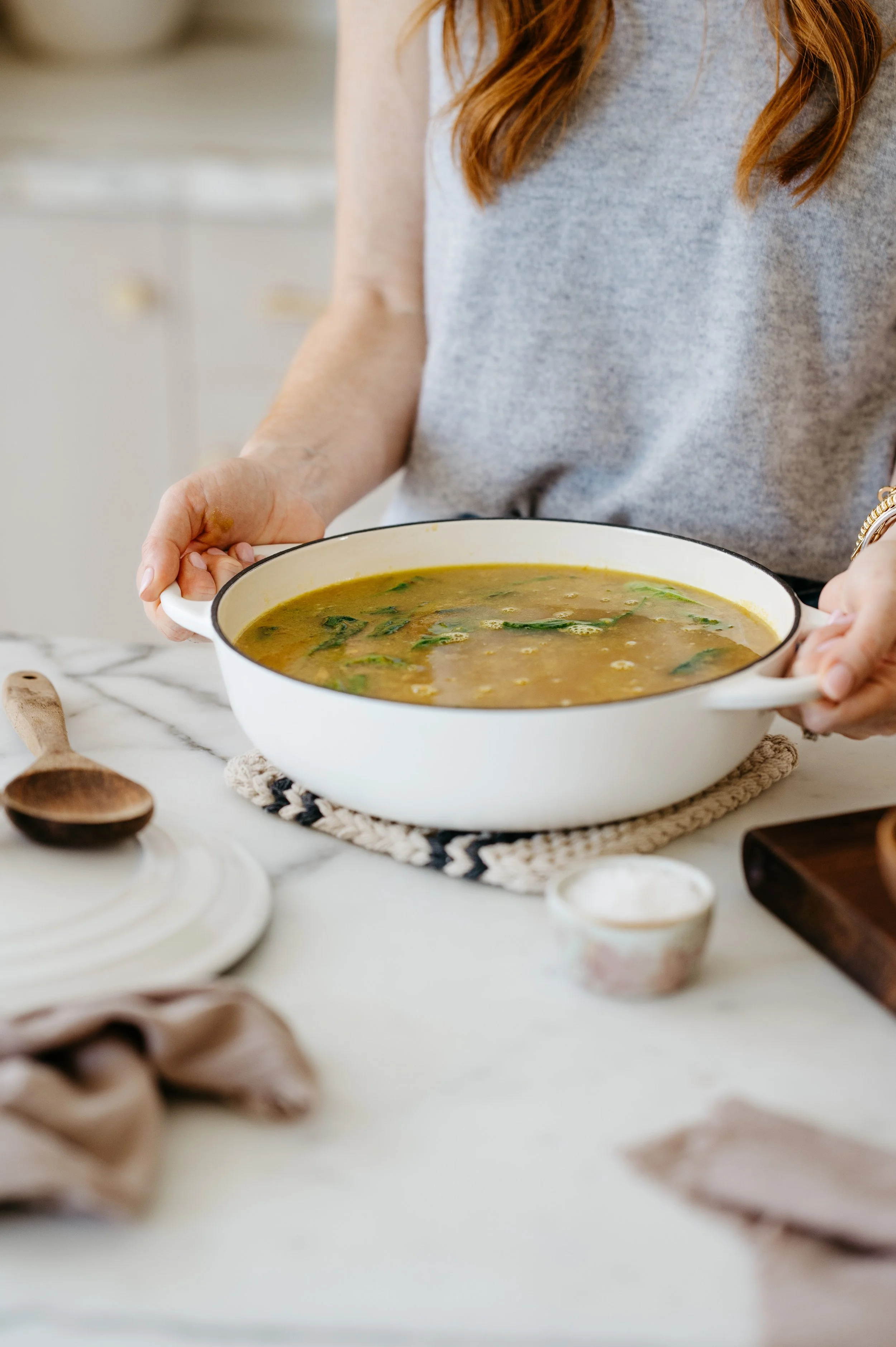
Soups and stews are especially useful here because you're getting food and fluid together.
And while I'm absolutely not someone who thinks you need to eat nothing but soup postpartum, having a few nourishing soups or stews in the freezer is incredibly handy, especially for the early postpartum weeks when broth-based, warm and liquid-heavy meals are so supportive to your digestion, healing, and recovery.
4. Omega-3 fats
I also like making sure some omega-3-rich foods make their way into postpartum prep.
Fatty fish like salmon provides the omega-3 fats DHA and EPA and lots of minerals, which are incredibly important postpartum and during breastfeeding for your mental health and baby’s continued brain development.
The trick is choosing fish recipes that actually freeze well.
Two of my favourites are salmon stew and salmon patties.
Salmon stew gives you protein and omega-3 fats in a comforting meal that's easy to reheat, while salmon patties can be frozen individually and pulled out as needed.
Add one to a lunch plate, pair it with some vegetables and rice for dinner, or tuck it into a sandwich.
Again, I want foods that make eating well easier, not foods that require you to cook an entirely new meal around them
5. Enough food
This one gets left out of conversations about "healing foods" all the time and I’m really trying to change that.
You need enough food.
Postpartum nutrition isn't about making every bite as nutrient-dense as humanly possible.
You're recovering from pregnancy and birth. You're sleeping less. Your hormones are changing. You're caring for a newborn. And if you're breastfeeding, you're also using additional energy to produce milk.
I want postpartum meals to actually fill you up and meet your body’s energy needs, which are higher now than they have ever been.
That means protein, yes — but also carbohydrates and fats.
And I want snacks to be substantial enough that when you're ravenous while feeding a baby at 2 p.m. (or 2 a.m.), eating one actually makes a dent in your hunger.
Sometimes one of the most useful things you can do for postpartum nutrition is simply make it easier to eat enough food consistently.
Want actual ideas for what to make?
I have 70 postpartum meal-prep ideas — including breakfasts, snacks, prepared proteins, lunches and dinners — in my Ultimate Guide to Postpartum Meal Prep.
This is where to go if you're ready to move from what should I prioritize nutritionally? to okay, what should I actually make?
Don't forget to freeze snacks
I think people tend to imagine postpartum freezer prep as dinner prep. But you're going to eat a lot more often than once at dinner.
You may be hungry while feeding your baby. Between meals. In the middle of the night. Or during the five-minute window when someone else happens to be holding the baby and you realize you haven't eaten in four hours.
So I want snacks that are easy to grab, substantial enough to actually help with hunger, and ideally give you some combination of protein, carbohydrates, fat and fibre.
Some of my favourite one-handed snacks to freeze are:
one-handed freezer burritos
homemade protein balls
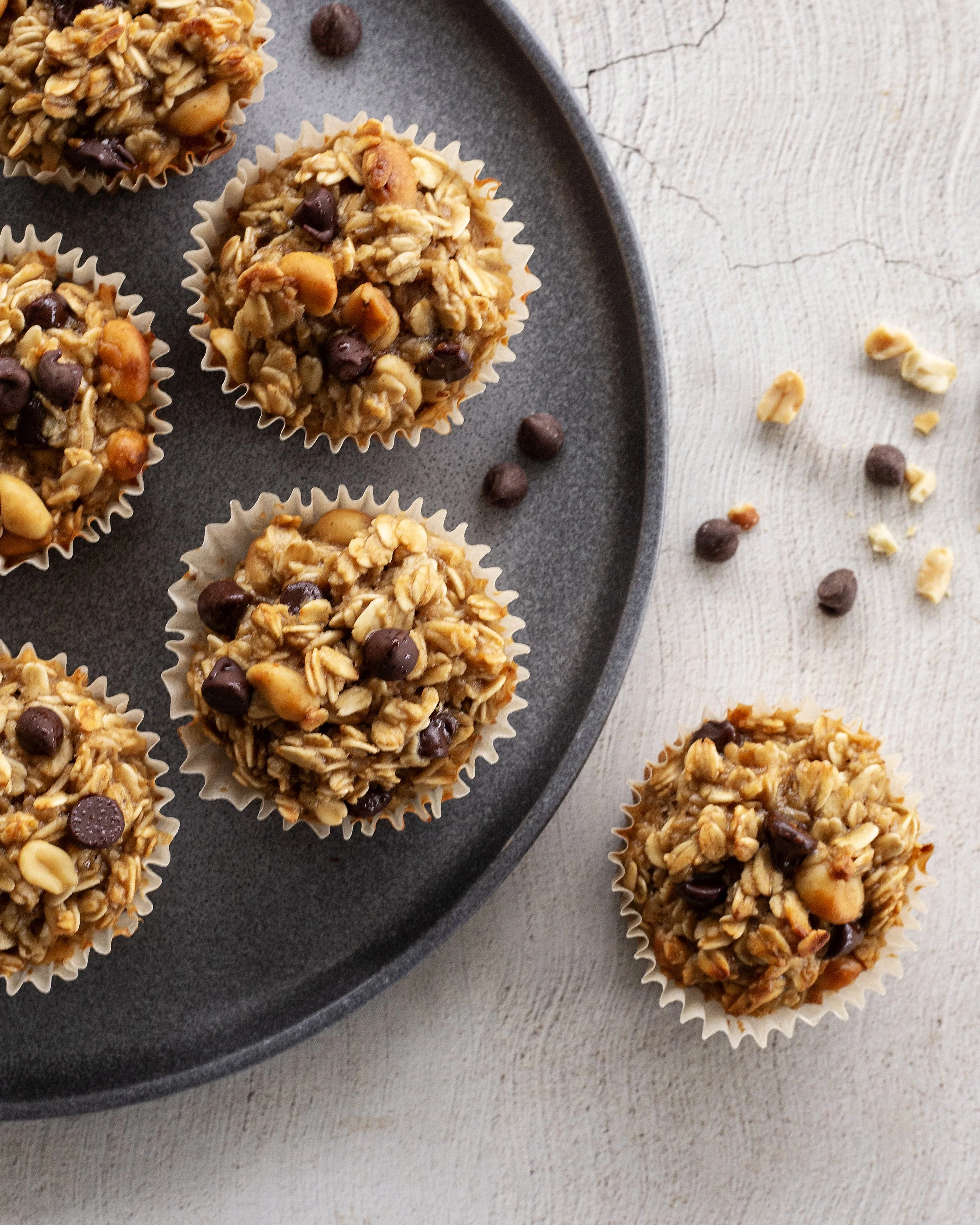
no-bake oat bars
lactation cookies
high-protein blueberry pancakes
And yes, I absolutely consider pancakes a snack!
You can pull one or two out of the freezer, warm them up and eat them with nut butter without needing to sit down to an entire breakfast.
Looking for more? There's an entire freezer-snack section in my list of 70 postpartum meal-prep ideas.

Your postpartum freezer doesn't need to be perfect
You don't need every meal you freeze to check every one of these boxes.
What I want you to do is zoom out and look at your freezer as a whole.
Do you have plenty of easy-to-grab protein? Some iron-rich foods? Fibre-rich meals and snacks? A few sources of omega-3s? Foods that are substantial enough to actually fill you up?
And, maybe most importantly: is it food you actually want to eat?
That's what a well-stocked postpartum freezer looks like to me. Not 30 perfectly planned “postpartum meals,” but a collection of nourishing foods that make it dramatically easier to feed yourself while you're recovering and caring for a new baby.
Ready to start filling your freezer?
Once you know what you want your postpartum freezer to provide nutritionally, the next question is:
What should I actually make?
That's exactly what I cover in my Ultimate Guide to Postpartum Meal Prep.
You'll find my complete approach to postpartum meal prep, why I prioritize protein prep, and 70 ideas for breakfasts, snacks, prepared proteins, lunches and dinners that you can prep before baby arrives.
READ THE ULTIMATE GUIDE TO POSTPARTUM MEAL PREP →
And if you want the recipes and complete plan already done for you, my Ultimate Postpartum Nutrition Guide takes it several steps further.
It includes step-by-step guidance for how to nourish yourself for your postpartum recovery and real life with a baby, along with 120+ recipes across six dedicated recipe ebooks covering freezer-prep meals and proteins, one-handed snacks, simple lunches, breastfeeding recipes and more.
So instead of figuring out what to make, what to buy and how to put it all together, you can just follow the plan.